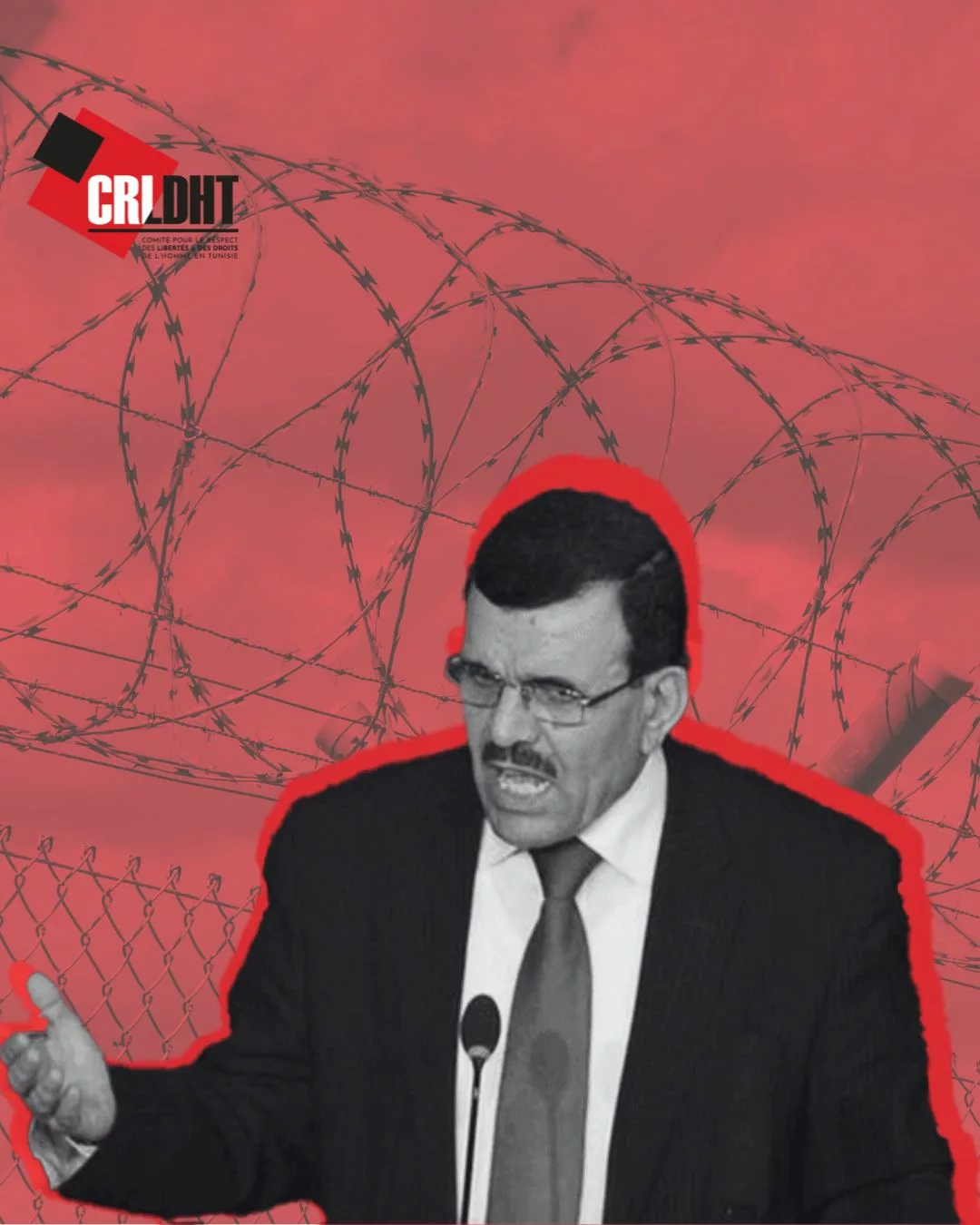
Following the deliberations of the Criminal Chamber of the Tunis Court of First Instance in the so-called " tassfir " transfer case (sending and recruitment of young jihadists to so-called zones of tension: Syria, Libya, etc.), and the heavy prison sentences handed down to the former Prime Minister, Ali Larayedh.), and the heavy prison sentences handed down to the former Prime Minister, Ali Larayedh, 34 years , and 18 to 36 years for seven other defendants - Abdelkrim Labidi, Fethi Beldi, Seifedine Rayes, Sami Chaar, Hichem Saadi, Nouredine Gandouz and Lotfi Amami - as well as the serious violations that marred the prosecution of this case, in particular:
- The abusive application of the organic anti-terrorist law n°26/2015 to alleged facts dating back to 2012;
- The investigation and trial were neither incriminating nor exculpatory, since the examining magistrate and the Criminal Division refused to interview, or even prosecute, the Ministry of the Interior officials in office at the time of the events, or to consult the Ministry's archives, including the minutes of meetings of the Minister in office at the time, and official correspondence deemed to have been "destroyed";
- The qualification of defendants considered responsible within the meaning of Article 10 of Law No. 26/2015, in other words "agents legally responsible for establishing and repressing terrorist offenses" , namely the Public Prosecutor's Office and the Judicial Police , while none of the defendants has under the law such prerogatives ;
- The fact that the authorities have refrained from interviewing the directors of the Ministry of the Interior and members of subsequent governments, even though statistical data show that the transfer phenomenon has worsened under their tenure;
- The absence of any link between the acts of which the defendants are accused and the charges brought against them.
The CRLDHT :
- Firmly condemns the violations - now systematic - of the right to a fair trial worthy of an independent judiciary, the so-called transfer case being yet another illustration of this.
- Denounces the political instrumentalization of an issue whose seriousness would require a thorough investigation that respects current legislation;
- Calls for serious judicial treatment of terrorism-related offences to ensure that justice is done and that such crimes are avoided in the future, especially as poverty and marginalization, which have worsened since Kaïs Saïed's coup d'état, provide fertile ground for extremism.
- Once again expresses its solidarity with the victims of these trials, held in defiance of elementary rules of justice , and considers the detention of the former Interior Minister and Prime Minister, Ali Larayedh, to be arbitrary. It describes his conviction as political, having been propagated on social networks close to the regime even before it was handed down by the courts!
- Reiterates its call to all members of the Tunisian judiciary and civil society to resist the current arbitrary practices and systematic human rights violations.