The publication of the national demographic census in May 2025 is a major event. Not just because it's an exhaustive statistical document, but because it reveals a silent state of emergency. It reveals what we are all experiencing without always being able to name it: a country that is emptying out, aging, cracking - and still standing thanks to those we can't see.
Women: invisible and sacrificed
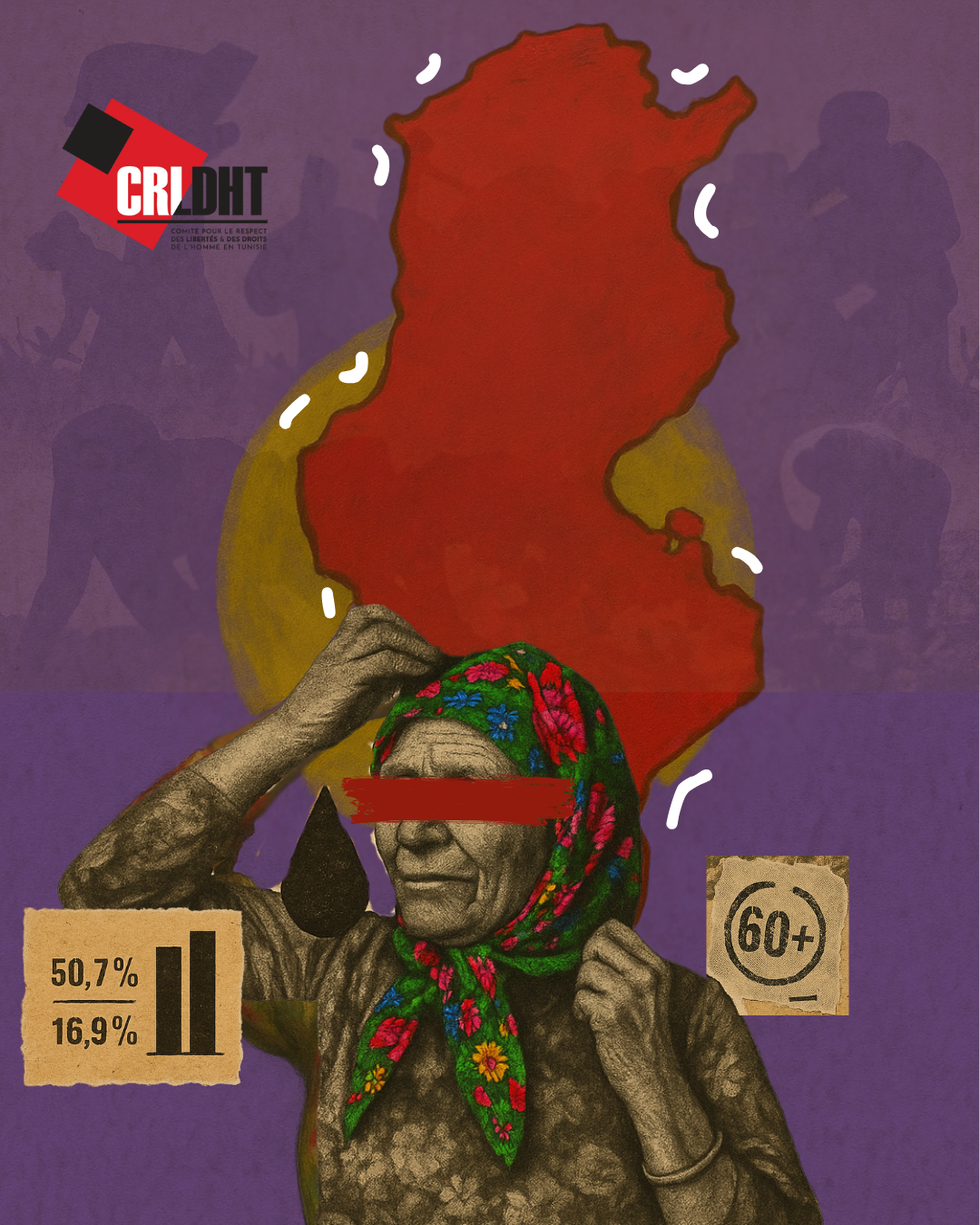
By 2024, 50.7% of the Tunisian population will be female. In regions such as Mahdia, Kasserine or Gafsa, this rate exceeds 52%. Why is this so? Because men are leaving. They flee unemployment, poverty and humiliation. They migrate. And it's the women who stay, who assume responsibility, who produce, who educate, who resist.
In the fields, in the factories, in the homes, they keep the country running - without status, underpaid, invisible, overexposed to violence. And yet, they are the last bulwark against collapse. This accelerated feminization of society - particularly in inland regions - is not neutral: it produces social imbalances, tensions and vulnerabilities. In a conservative country, the risk of feminicide, girls dropping out of school and further marginalization is real. Tomorrow's revolution will be a women's revolution, or it won't be.
The diaspora: a key player in the future, ignored in the present
With over 1.5 million Tunisians living abroad, the diaspora has become a strategic pillar. Financial transfers, family support, health and educational assistance: without them, whole swathes of the country would collapse. But what do they get in return? Contempt, exclusion, exploitation. The State reduces them to a currency box.
And yet, if it is structured today, it could hold the keys to power by 2035. The Tunisian economy, strangled by debt and lack of liquidity, will be increasingly dependent on its contribution. The network that best activates this link will have a decisive advantage.
Seniors: the silent, forgotten majority
In 2024, the over-60s will account for 16.9% of the population, with the dependency rate climbing to 28% (versus 18% in 2014). In regions such as Kef, Jendouba and Béja, almost 4 out of 10 inhabitants are elderly or dependent. And what does the State offer them? Nothing. No care policy, no decent income, no support. An entire generation, that of the post-independence era, is entering old age in oblivion.
This is another facet of the Tunisian drama: those who built this country are today abandoned by it. And this social void is filled - barely - by remittances from the diaspora.
Water: the hidden crisis that will sweep everything away
The census doesn't spell it out, but the figures speak for themselves. In inland regions, access to drinking water and sanitation remains dramatic: 20% to 40% coverage in some areas. Meanwhile, the population is concentrating in the already saturated cities. An ecological, social and health disaster in the making. And no one is responding. No strategy. No regional planning. No anticipation.
A collapsing society, a repressive government
What is the government doing in the face of these urgent issues? It censors, it persecutes journalists, it imprisons lawyers, it criminalizes human rights defenders. Sonia Dahmani has been in prison for over a year for speaking out. Abderrazak Krimi, imprisoned for his humanitarian work with refugees, has not even been able to bury his mother.
We're living in a time when speaking out is a crime, when solidarity is a crime, when authoritarian management attempts to mask institutional impotence. But the country is not held together by its institutions. It stands in spite of them.
It holds together because women strive to survive.
Because children live far from their parents to send them enough to live on.
Because pensioners go to sleep fearing they'll have nothing left.
Because here and there there are still pockets of courage that the figures don't measure.
But that courage runs out. And when there's none left, there's only anger.
Making social emergencies a political priority
It is imperative that the 2024 census be placed on our agenda. The dynamics it reveals - ageing, migration, feminization, territorial divide - have a direct impact on the exercise of human rights: the right to water, to a dignified retirement, to equality, to expression, to protection against violence.
Our advocacy, our struggles and our strategies must adapt to this reality. This is not only a condition of coherence, but also of political survival.
Tunisia 2025 is a tipping point. Either we build with lucidity and courage, or we'll wake up too late.
This country will not fall because of its enemies.
It will fall because those who bear it today can no longer do so alone.